

Mini-Feature
5 All-Rounder Pickup Trucks You Can Buy In America In 2026
From full-size pickups to a trail-ready midsize and a unibody truck, these five 2026 all-rounders blend towing, cargo utility, off-road ability and comfort.


From full-size workhorses to a trail-focused midsize and a unibody pickup, these five trucks cover very different versions of the all-rounder brief.
When a pickup truck is considered, its all-rounder credentials are validated by its usefulness outside the job it was mainly developed to do. It might spend weekdays commuting, haul equipment when required, tow a boat or trailer on a weekend and still have enough capability left for a camping trip.
There isn’t a single formula for doing all of that. A full-size truck can achieve it through a huge spread of configurations and powertrains, while a midsize model can trade some outright capacity for trail ability and easier maneuverability. On the other hand, a unibody pickup can go in the opposite direction, prioritizing passenger comfort and clever cargo packaging over conventional truck hardware.
The five trucks here represent those different interpretations of the brief. They are not ranked in any particular order.
Ford F-150
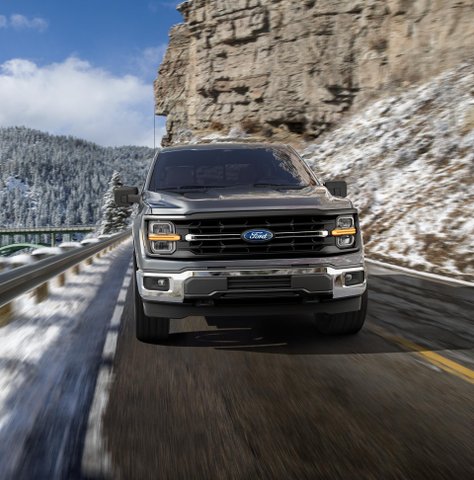
Ford gives the F-150 an unusually broad menu for a single nameplate. The 2026 lineup spans eight trims, three cab styles and multiple bed lengths, with the available combinations varying by version. Buyers can choose between the 2.7-liter EcoBoost V6, 3.5-liter EcoBoost V6, 5.0-liter V8 and PowerBoost hybrid, while the Raptor and Raptor R take the same basic pickup into much more specialized territory.
Its towing capability goes from 8,400 pounds with the 2.7-liter EcoBoost to 13,500 pounds with the range-topping 3.5-liter EcoBoost. The 5.0-liter V8 can reach 12,800 pounds, while the PowerBoost is rated for up to 11,600 pounds. Ford also makes Pro Power Onboard standard with the PowerBoost, giving the hybrid a useful role at a campsite or worksite that has nothing to do with towing.
Off-road buyers have the Tremor, while the Raptor and Raptor R sit at the far end of the performance spectrum. An F-150 built around towing can consequently look very different from one intended for trail use or daily driving. Few trucks offer so many legitimate answers to the question of what the same pickup should be used for.
Chevrolet Silverado 1500
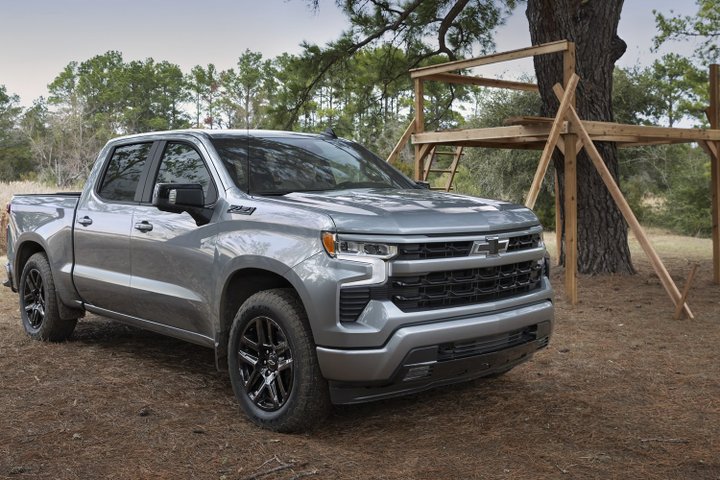
The Silverado makes a more straightforward case. Much of its versatility is built into the parts of the truck that are supposed to work. Four engines are available for 2026: the 310-hp TurboMax, 355-hp 5.3-liter V8, 420-hp 6.2-liter V8 and 305-hp 3.0-liter Duramax diesel. The diesel produces 495 lb-ft of torque and can return up to 28 mpg on the highway under the applicable EPA configuration.
For heavier jobs, maximum available towing reaches 13,300 pounds and maximum available payload is 2,260 pounds. Neither figure applies across the entire range, but both show how much capability can be built into a light-duty Silverado without moving into the HD lineup.
Work utility continues at the back. The Durabed has 12 standard tie-downs rated at 500 pounds per corner, while the Multi-Flex tailgate provides six functions for loading and accessing the cargo area. Available trailering technology can also provide up to 14 camera views around the truck and trailer. A Silverado therefore makes sense on a list like this without needing an unusual configuration or a lifestyle-oriented trim to justify its inclusion.
Ram 1500
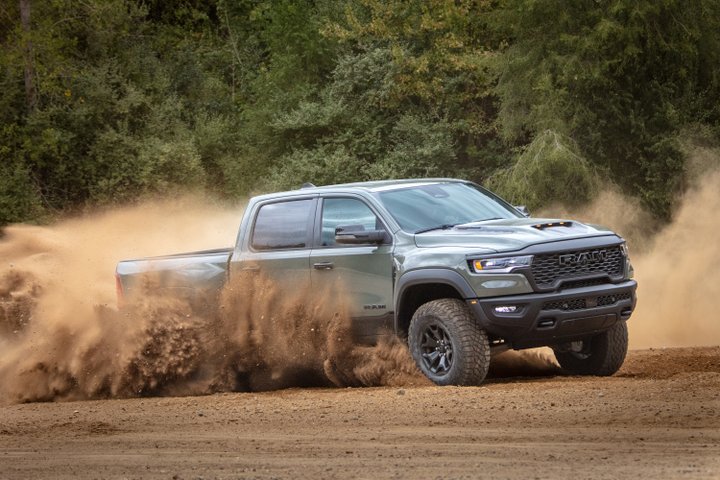
Ram approaches the same problem from the driver's seat rather than the job site. The 2026 1500 lineup includes the 305-hp 3.6-liter Pentastar V6, 395-hp 5.7-liter HEMI V8 and two versions of the 3.0-liter Hurricane inline-six. Maximum towing reaches 11,610 pounds with the standard-output Hurricane, while a properly equipped Pentastar version can carry up to 2,360 pounds of payload. The high-output Hurricane makes 540 hp and can tow up to 10,000 pounds.
More telling are some of the features that have little connection with maximum ratings. Available four-corner air suspension can lower the truck to reduce aerodynamic drag and make loading easier. RamBox storage puts lockable compartments alongside the bed, while the Rebel and RHO give owners factory-built routes into off-road driving. The 1500 can therefore spend its working hours as a capable pickup without making the empty-bed portion of ownership feel like an afterthought.
Toyota Tacoma
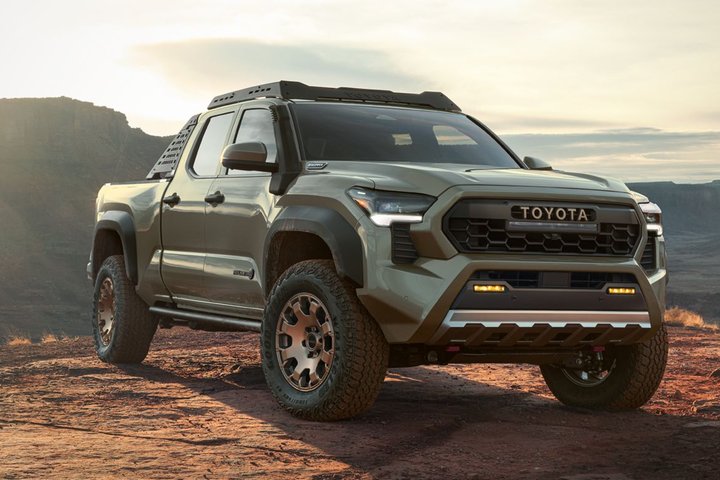
The Tacoma does not need full-size towing numbers to earn a place here. Its argument is that an owner can get substantial pickup utility and serious trail hardware without stepping up to a much larger truck.
Maximum towing is 6,500 pounds, with payload reaching 1,705 pounds. The available i-FORCE MAX hybrid produces 326 hp and 465 lb-ft of torque, while the turbocharged four-cylinder produces up to 278 hp. Selected non-hybrid versions can still be ordered with a six-speed intelligent manual transmission.
Toyota's trim structure is particularly useful for an all-rounder brief. TRD Off-Road brings trail-focused equipment, while TRD Pro pushes further with hardware aimed at more demanding terrain. Trailhunter takes a different route again, adding an overlanding-oriented setup. Multi-Terrain Select, CRAWL Control and an electronically locking rear differential are among the available off-road tools. The Tacoma's appeal is not maximum capability in isolation. It is the ability to move between ordinary pickup duty and serious recreational use without needing a full-size footprint.
Honda Ridgeline
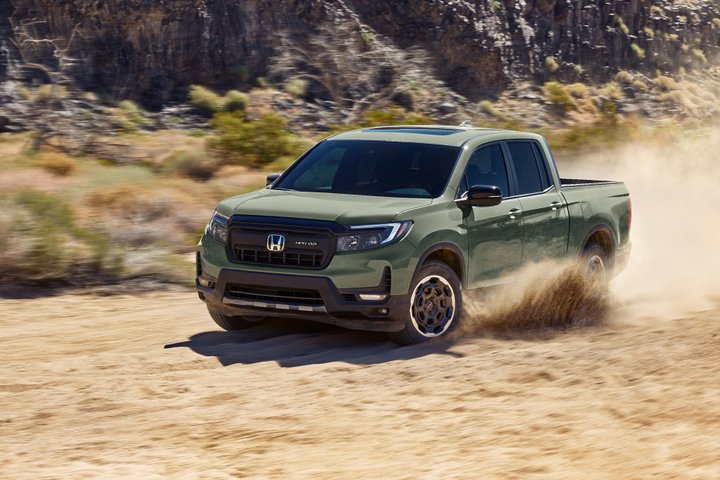
Honda's approach starts by questioning how much traditional pickup architecture an everyday owner actually needs. The Ridgeline uses unibody construction and independent suspension, with a 280-hp V6, standard i-VTM4 all-wheel drive and a 5,000-pound towing rating. Maximum payload reaches 1,583 pounds on the lightest configuration.
The cargo area is where the unusual layout pays dividends. A 7.3-cubic-foot lockable In-Bed Trunk sits beneath the bed floor, the dual-action tailgate can open downward or swing sideways, and the bed is designed to handle bulky or messy items separately from the cabin. Under-seat storage adds another place for gear that should stay out of the weather.
The TrailSport adds an off-road-tuned suspension, all-terrain tires and additional underbody protection. Nobody would confuse it with a Tacoma TRD Pro, and Honda does not need to make that argument. The Ridgeline is here because it can serve as a family vehicle, cargo carrier, light-duty tow vehicle and recreational machine without requiring its owner to live with all the compromises of a traditional body-on-frame pickup.
Recommended Articles
Every Type of 10-Speed Automatic Transmission Explained

2028 Toyota Hilux FCEV Targets 248 Miles of Range

The Ford Bronco Filson Is A Luxury Bronco That Still Wants To Go Off-Road

10 Most Luxurious Sedans You Can Buy In America Right Now

5 Car Features That Sound Smart Until You Actually Own One
10 New Cars That Don’t Fit The Usual American Automotive Mold
BYD Recalls More Than 180,000 Vehicles Over Brake-Pedal Defect

Volkswagen Faces Bigger Cuts as Profit Outlook Takes a Hit

Every Car That Came With a 7-Speed Manual
Join the Conversation
Comments
Loading comments…
No comments yet. Be the first to start the conversation.