
Car ownership
5 Car Features That Sound Smart Until You Actually Own One
Touchscreens, electronic shifters, subscriptions and bigger wheels all have good reasons behind them. That doesn't mean drivers will love living with them.
Automakers are good at selling ideas. A touchscreen looks modern, while an electronic shifter frees up space. A subscription can turn software into a service, and larger wheels can make a relatively affordable crossover look considerably more expensive.
Most of those ideas make sense from the perspective of designing and selling a car. The compromises tend to become clearer once the same features become part of a daily routine. Some are genuinely useful. Others solve a problem the driver may never have considered a problem in the first place.
Touchscreens That Do Too Much
J.D. Power's 2026 U.S. Initial Quality Study found that infotainment was the only vehicle category to worsen year over year. Among owners who reported a distracted-driving problem, 46 percent identified the infotainment system or touchscreen as the source.
The number doesn't mean every touchscreen-heavy interior is difficult to use. Navigation, music and vehicle settings are obvious candidates for a display, particularly when they aren't used constantly. The problem is what happens when the screen becomes the default control for almost everything else.
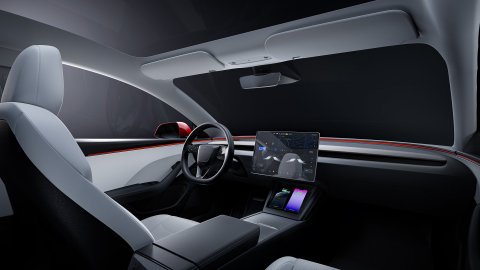
The 2026 Tesla Model 3 is an extreme example. Its 15.4-inch center display handles functions including gear selection, steering-wheel adjustment, mirror adjustment and airflow. Consumer Reports described the arrangement as thoroughly distracting, with almost every task in the vehicle routed through the screen.
That makes the Model 3 less a criticism of touchscreens themselves than a demonstration of what happens when physical controls disappear altogether. A driver can glance at a screen to read a map without much difficulty. Adjusting a function that requires navigating the interface is a different task because the driver has to find the control before operating it.
There is a practical reason manufacturers keep moving in this direction. One display can replace a large collection of buttons, switches and knobs, while software makes it possible to add or rearrange functions later. The dashboard becomes cleaner and easier to change without redesigning the hardware.
Touch Controls On The Steering Wheel
A control on the steering wheel has one disadvantage a dashboard touchscreen doesn't: its position changes with the wheel. Tesla's refreshed Model 3 replaced the conventional turn-signal stalk with touch-sensitive buttons on the steering wheel. Consumer Reports found that the buttons can be difficult to locate when the wheel is turned and reported instances where the signals didn't activate when pressed.
That criticism isn't universal. The stalkless arrangement can feel unusual at first, but the turn-signal buttons are relatively easy to learn, with a raised section between them providing a tactile reference for the left and right signals. Once familiar with the layout, the controls don't necessarily demand the constant visual attention their unfamiliarity might suggest.
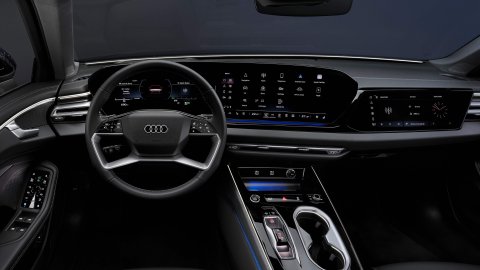
Audi has taken a different approach in some newer models, with physical controls returning to parts of the interface where earlier designs relied more heavily on capacitive controls. Its 2026 A6, for example, adds a physical scroll wheel in the center console.
Electronic Gear Selectors
The 2026 Nissan Armada's electronic gear selector is much less dramatic than Tesla's interface, but the underlying trade-off is familiar. The selector uses low-mounted, piano-black buttons. Consumer Reports found that the buttons look too similar and offer too little tactile differentiation to let drivers use them confidently without looking down.
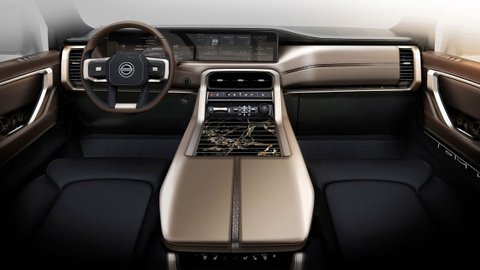
Electronic shifting has a straightforward engineering advantage. Without a mechanical connection between the driver's hand and the transmission, designers have much more freedom over where the selector goes and how much space it occupies.
What disappears is some of the feedback provided by a conventional lever. A traditional shifter has a physical position that the driver's hand can find and move. A group of similar buttons communicates more through sight than movement.
Subscriptions For Things The Car Already Has
Ford's BlueCruise shows why the subscription argument isn't quite as simple as “paying for something you already own.” The system is available for $49.99 a month or $495 annually, with a $2,495 one-time purchase available at vehicle purchase. Ford says vehicles equipped with the necessary BlueCruise hardware can be activated under any of those plans.
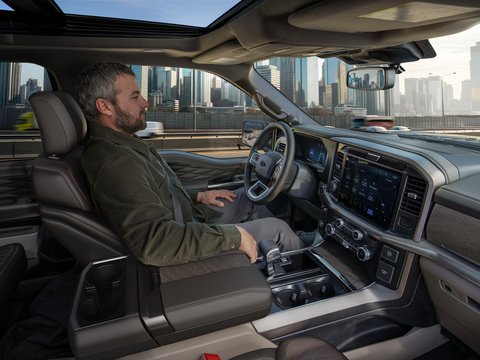
The monthly option makes more sense than it initially appears for an occasional user. Ford specifically gives the example of activating BlueCruise for a road trip and then not paying for it again until another trip or holiday season. Someone who uses the system for only a couple of months a year could therefore spend roughly $100 rather than committing to the annual plan or paying for lifetime access.
The equation is very different for somebody who uses it every day. There are also continuing services behind BlueCruise. Ford maps the highways where hands-free operation is available, maintains the software and has added functions such as automatic lane changes and in-lane repositioning. The capability isn't simply frozen at the moment the vehicle leaves the factory.
That makes a subscription easier to defend than a hypothetical paywall around a feature that never changes. It doesn't necessarily make every subscription model attractive, though.
Deloitte's 2026 automotive consumer research found that many consumers are open to vehicles gaining functionality through over-the-air updates, although U.S. consumers are less enthusiastic about software-defined vehicle features than consumers in several other markets.
Bigger Wheels
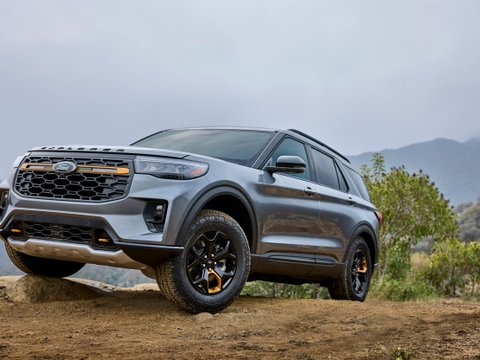
The case for bigger wheels is easier to understand. Performance cars can use them to accommodate larger brakes and wider tires, and the resulting combination can contribute to handling.
The downside usually arrives through the tire. A larger wheel generally means a shorter sidewall, leaving less tire between the rim and a pothole or sharp road edge. Consumer Reports notes that larger wheels and low-profile tires can produce a harsher ride and make tires and wheels more vulnerable to pothole damage. Replacement tires can also cost more.
For a performance car, those compromises can be part of the reason the car drives the way it does. On a regular crossover, the larger wheel may simply be the more expensive way to achieve a particular look.
Keep reading
More from this author
10 New Cars That Don’t Fit The Usual American Automotive Mold
From a gear-shifting EV to a 1,064-hp Corvette, these 10 new cars defy the usual American automotive categories in 2026.
Read article
Renault Niagara Debuts As A Pickup With SUV Comfort And Hybrid Power On The Way
Renault’s Niagara pickup brings SUV-like comfort, Google-based tech and multiple powertrains to Latin America, with a hybrid 4x4 version planned.
Read article
Why Automakers Are Putting Gas Engines Back Into Electric Vehicles
The gasoline engine was supposed to disappear from the American automobile. Instead, automakers are finding a new job for it.
Read article
Dacia Gives Its Tiny EV A Big Upgrade Without Raising The Price Ceiling
The second-generation Dacia Spring adds space, technology and Slovenia production while keeping its European price below €20,000 before incentives.
Read article