
2028 Toyota Hilux FCEV Targets 248 Miles of Range
Toyota's hydrogen-powered Hilux is targeted for 2028 with more than 248 miles of WLTP range and up to 5,512 pounds of towing capacity.


Toyota has finally put some numbers on its production hydrogen Hilux. The fuel-cell pickup is targeted for 2028, with more than 248 miles of WLTP range and up to 5,512 pounds of towing capacity. The figures apply to the European-market truck, and Toyota has not announced the Hilux FCEV for the U.S.
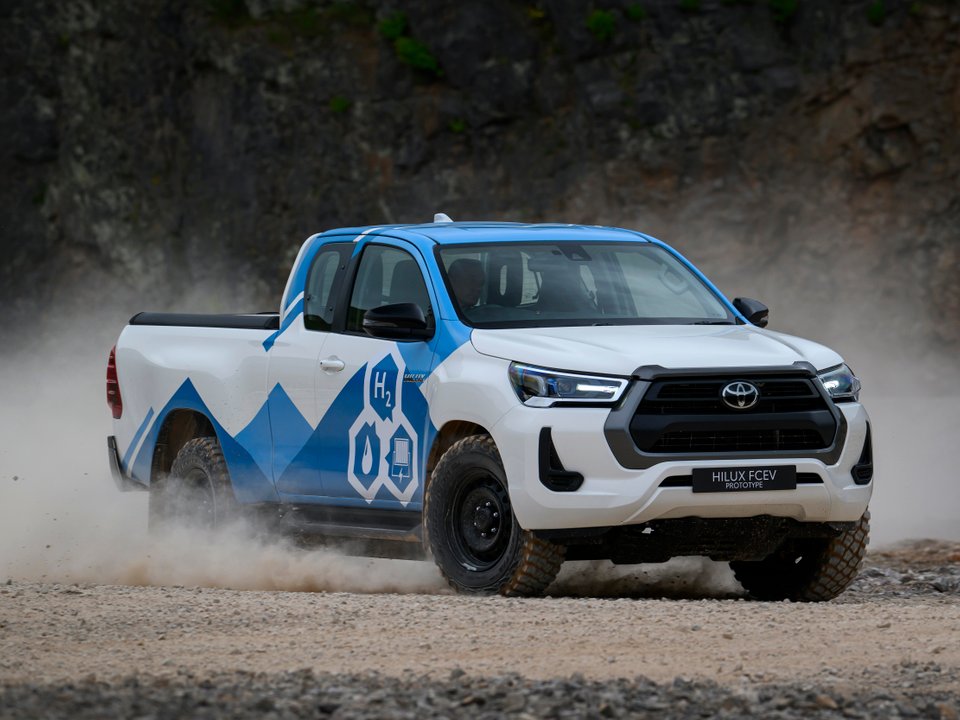
The Production Hilux Will Use Hydrogen, Not A Giant Battery
The production Hilux FCEV will generate electricity onboard using hydrogen rather than relying on a large traction battery. Toyota has not yet detailed its final power output, hydrogen storage capacity, payload or pricing.
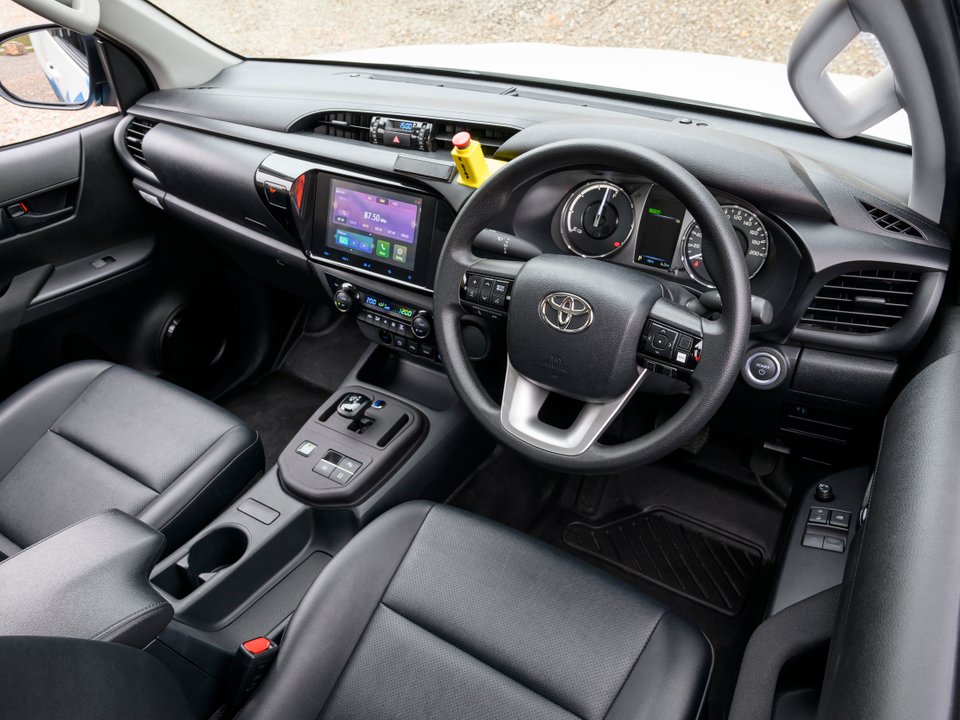
The more than 248-mile figure is also a WLTP target, not an EPA range rating. The 5,512-pound towing figure is Toyota's European target for the fuel-cell version, while other Hilux variants can tow up to 7,716 pounds depending on specification and market. The fuel-cell system is intended to give the Hilux an alternative to a battery-electric powertrain while retaining the basic utility expected from a pickup.
Production Targets Differ From The 2022 Prototype
Toyota has already gone through the engineering exercise with prototype Hilux FCEVs. The company built 10 prototypes in the U.K., with five used for field testing and five allocated to customer and media evaluation.
The prototype used three hydrogen tanks holding a combined 17.2 pounds, along with a 180 hp fuel-cell stack and a lithium-ion battery mounted in the rear load deck. Toyota previously quoted an expected range of up to 373 miles for the prototype.
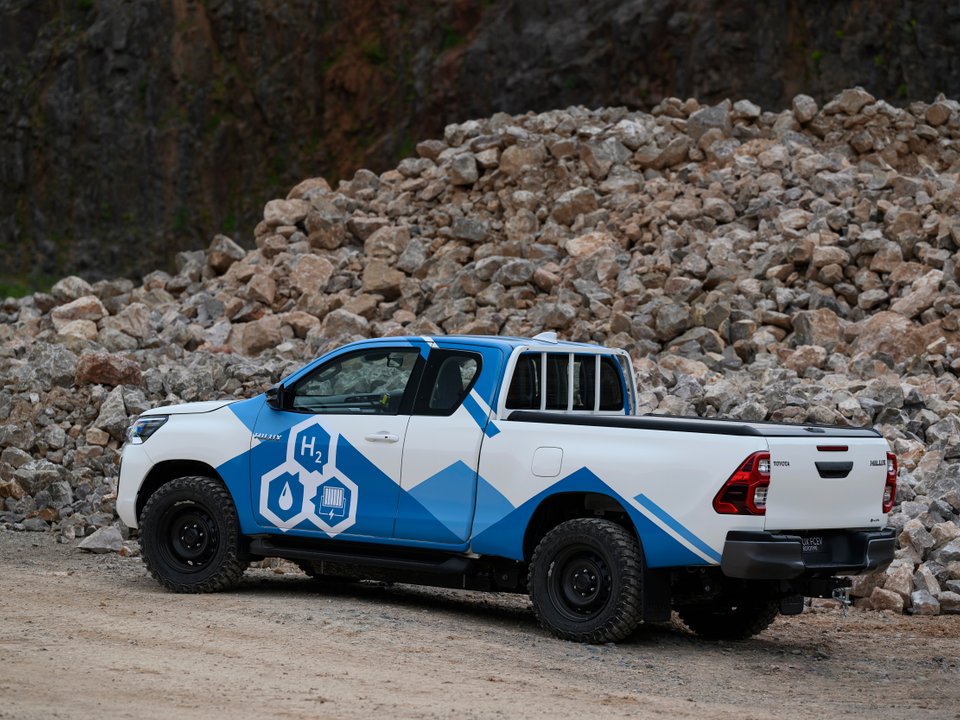
The current production target of more than 248 miles is therefore lower than the earlier prototype figure on paper, although the two figures are not directly comparable. The prototype was an engineering demonstrator, while the latest figure is a target for the production vehicle.
The Hilux Is Becoming A Four-Powertrain Experiment
The hydrogen version will join a much broader Hilux powertrain strategy. The ninth-generation pickup is being offered with battery-electric, 48-volt hybrid and conventional combustion powertrains depending on the market, with the fuel-cell version adding another option from 2028.
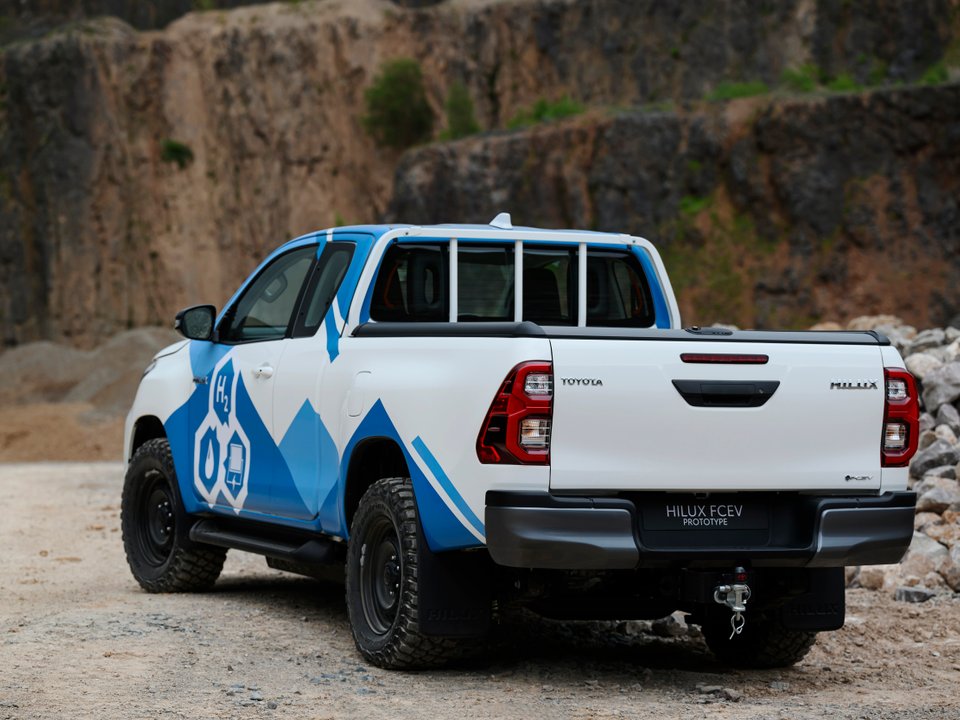
Toyota is pursuing the approach across its European light-commercial vehicle range as it works toward 200,000 annual LCV sales and an 8% European market share by 2030. The Hilux therefore sits within a wider strategy in which Toyota is keeping several powertrain technologies in play rather than moving the entire range toward a single solution.
Hydrogen Trucks Are Coming To The U.S. — Not This One
Toyota has not announced a production Hilux FCEV for the U.S., and the Hilux itself is not sold in the American market. Toyota's U.S. hydrogen activity is instead focused heavily on commercial trucking.
In May 2026, Toyota announced a partnership with Hyroad to deploy 40 hydrogen fuel-cell Class 8 trucks in Southern California. The program is tied to hydrogen infrastructure being developed around Ontario, California, including a station intended to support the trucks' operations.
Toyota has separately described hydrogen as a technology suited to applications where long range, high utilization and rapid refueling are important, making heavy-duty freight one of its main areas of focus in the U.S.
A Fuel-Cell Hilux Is Also Racing At Dakar
Toyota is taking the technology into competition before the production Hilux FCEV arrives. The DKR GR FC Hilux is scheduled to enter the 2027 Dakar Future Mission 1000 in Saudi Arabia.
The competition truck replaces the gasoline engine in the DKR GR Hilux with Toyota's fuel-cell system. Toyota says the vehicle will compete across 13 stages covering 621 miles of competitive distance.
The Dakar program is not a production Hilux test, but it gives Toyota another environment in which to develop and evaluate its fuel-cell technology. Toyota's current plan puts production of the Hilux FCEV in 2028 for Europe. The company has not yet announced U.S. availability, final production specifications or pricing.
Recommended Articles
10 New Cars That Don’t Fit The Usual American Automotive Mold
Why Automakers Are Putting Gas Engines Back Into Electric Vehicles

Volvo Gives Its XC60 And XC90 Plug-In Hybrids More Than Twice The Electric Range
Renault Niagara Debuts As A Pickup With SUV Comfort And Hybrid Power On The Way

10 Things You Need To Know About The Toyota GR GT
Porsche Wants Its Old EV Batteries To Come Back As New Ones
McLaren Is Building The One Car It Once Said Made No Sense

The World of BRABUS: Everything the German Tuning Giant Does Beyond Cars

Join the Conversation
Comments
Loading comments…
No comments yet. Be the first to start the conversation.