
Volkswagen Mission Efficiency Is An EV Prototype Obsessed With Efficiency
Volkswagen’s Mission Efficiency prototype claims 6.89 kWh/100 km, a 0.158 Cd and a 54.9-kWh battery using production-derived EV technology.


Volkswagen’s new near-production electric prototype combines a 0.158 drag coefficient with a 54.9-kWh battery and production-derived powertrain technology.
Volkswagen has unveiled the Mission Efficiency, a near-production electric prototype it calls the world’s most efficient near-production electric car. The low-slung 2+2 is designed around reduced drag and low energy use, while drawing on production-derived technology from the brand’s latest electric vehicles.
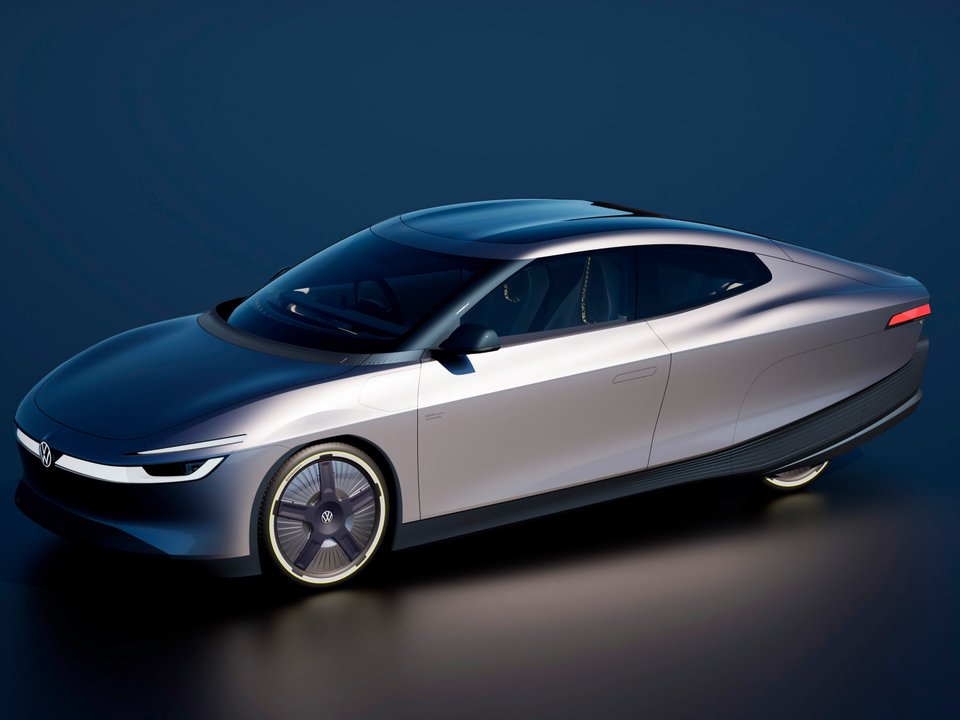
Volkswagen Focuses on Aerodynamics and Efficiency
The Mission Efficiency’s defining figure is its 0.158 drag coefficient, which Volkswagen describes as a record for a road-approved car. The streamlined body is 4,775 mm long and 1,392 mm tall, with a frontal area of 2.08 square metres. Its teardrop-shaped profile, active cooling flaps, covered rear wheels and fully clad underbody are all intended to reduce aerodynamic drag.
Volkswagen says the benefit becomes especially significant at speed. Above 80 km/h, the prototype’s energy consumption is more than 30% lower than that of the standard ID. Polo. At 140 km/h, Volkswagen says the Mission Efficiency uses roughly the same amount of energy as an ID. Polo travelling at 100 km/h.
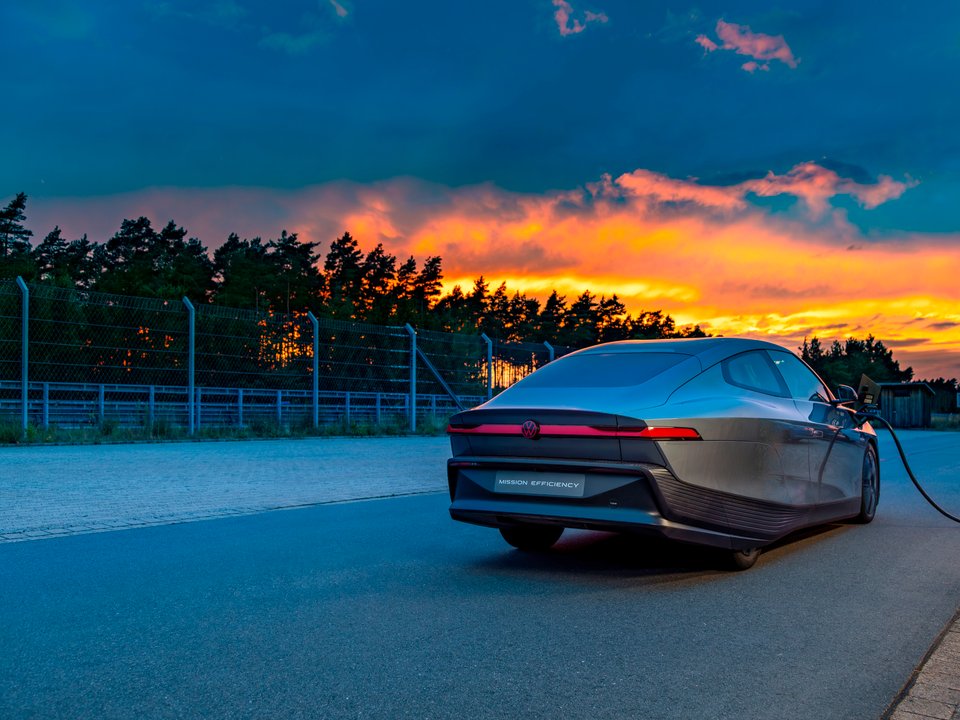
Wheel and tyre development was a major part of the programme. Volkswagen says wheels account for 25% to 30% of aerodynamic resistance, leading to patented rim deflectors intended to limit turbulence around them. The prototype also uses a Continental concept tyre with rolling resistance rated at 4.9 kilograms per tonne.
It Uses Production-Derived EV Technology
Despite its experimental bodywork, the Mission Efficiency is based on the front-wheel-drive MEB+ architecture and uses components intended for Volkswagen production EVs. Its electric motor produces 99 kW (135 PS), while the high-voltage battery has a net capacity of 54.9 kWh.
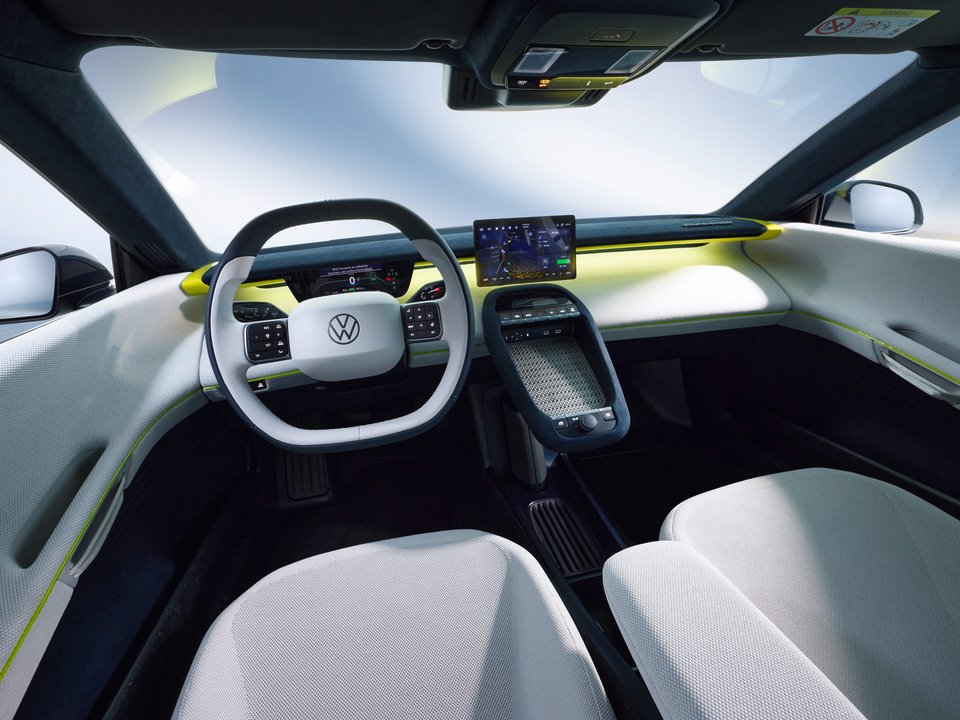
Mission Efficiency at a glance
- Drag coefficient: 0.158 Cd
- Real-world test consumption: 6.89 kWh/100 km without charging losses
- Motor output: 99 kW (135 PS)
- Battery capacity: 54.9 kWh net
- Documented route: 1,278.36 km from Wolfsburg to Vienna
Volkswagen officially documented a 1,278.36-km drive from its development centre in Wolfsburg to Vienna, travelling through Poland and the Czech Republic. The prototype recorded 7.51 kWh/100 km including charging losses, or 6.89 kWh/100 km without them, at an average speed of 67.72 km/h. It reached 138 km/h and arrived in Vienna with 164 km of remaining range.
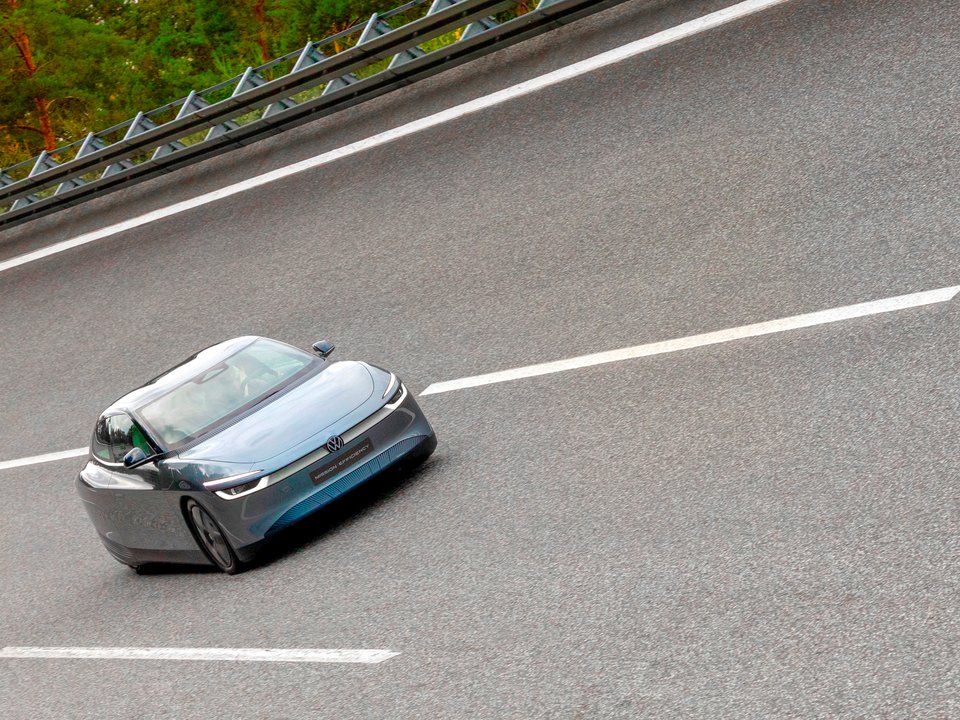
A 370-W photovoltaic system integrated into the glass roof and trunk lid is another efficiency-focused feature. Depending on weather, location and season, Volkswagen says it can contribute up to 30 km of real-world range per day.
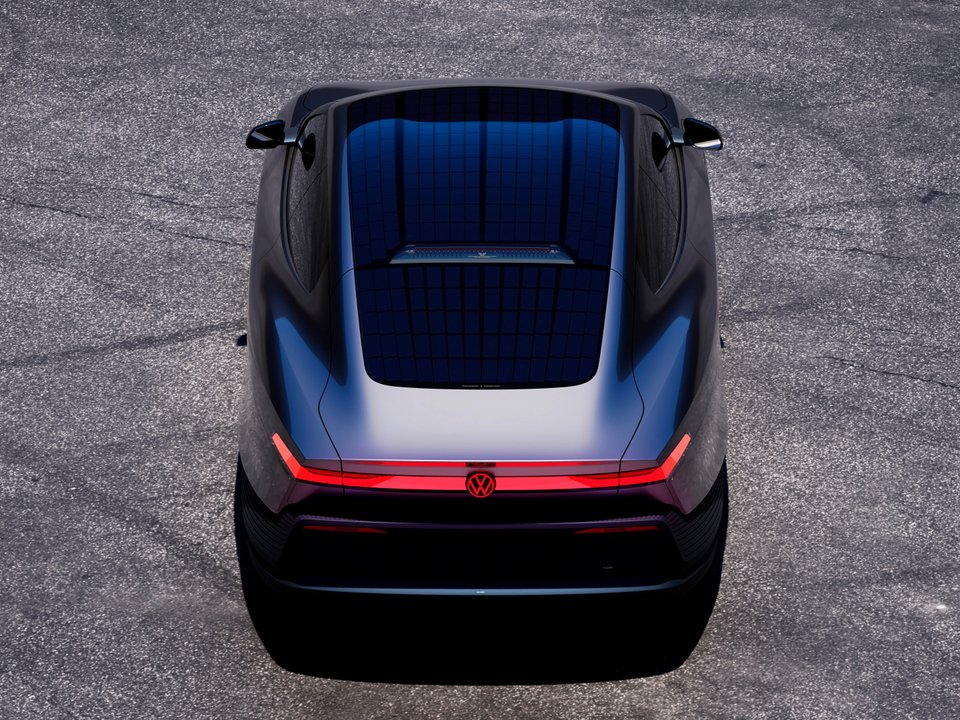
Volkswagen Is Testing More Than Just Aerodynamics
The Mission Efficiency also introduces an electromechanical rear brake developed with AUMOVIO. Volkswagen says the system reduces friction losses, eliminates brake lines and fluid at the rear, and allows more flexibility in brake-force distribution and regenerative braking. The prototype has EU road approval and meets the relevant safety, strength and crash requirements.
Volkswagen says the project demonstrates what can be achieved with large-scale production technology rather than expensive specialist hardware. It also points to the 2013 XL1 as an inspiration for the Mission Efficiency’s aerodynamic, efficiency-first approach.
The Mission Efficiency remains a concept vehicle and is not for sale. Its purpose, Volkswagen says, is to show how much efficiency can be extracted from technologies already being developed for future production EVs.
Source: Volkswagen Group.
Recommended Articles

Audi A2 e-tron Revives A Familiar Name With Efficiency As Its Calling Card
Dacia Gives Its Tiny EV A Big Upgrade Without Raising The Price Ceiling
10 New Cars That Don’t Fit The Usual American Automotive Mold
9 Factory 1,000-HP Cars That Aren’t Hypercars

8 Used Performance Bargains That Can Outrun a 2027 Corvette Stingray
Gone But Never Forgotten: 11 Unforgettable V10 Road Cars

8 New V12-Powered Cars You Can Buy in 2026
Join the Conversation
Comments
Loading comments…
No comments yet. Be the first to start the conversation.