

Feature
McLaren Is Building The One Car It Once Said Made No Sense


Thumbnail image: AI-generated.
McLaren spent years arguing that an SUV did not fit its brand, technology or business. Now a £500 million investment is helping build the infrastructure for one, along with a much broader future for the company.
Over the past decade, the performance-car industry's most conspicuous growth story has been the SUV. Aston Martin has the DBX, Lamborghini has the Urus and Ferrari eventually joined them with the Purosangue. McLaren was the notable exception.
For years, the company had a straightforward explanation for staying out. In 2018, then-CEO Mike Flewitt argued that an SUV could dilute McLaren's brand, that the company lacked the technology to build one properly and that developing an entirely new type of vehicle would require an investment that did not make financial sense.
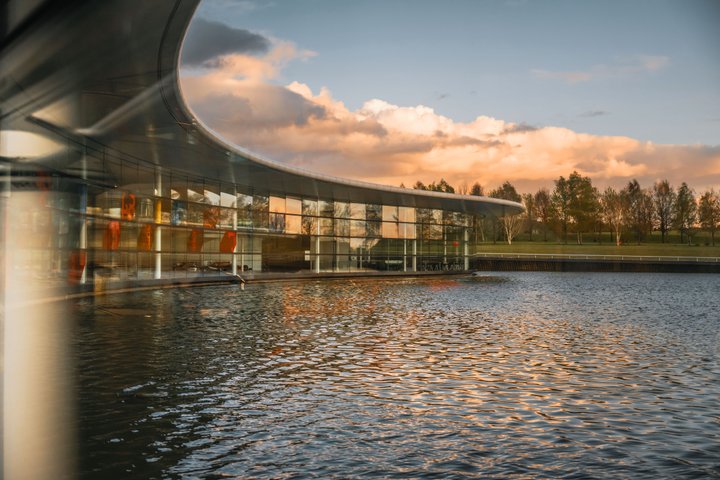
McLaren has since committed £500 million to expanding its UK manufacturing and engineering operations, confirmed a new vehicle assembly facility and said its next generation of cars will include its first performance-focused SUV. The question is what changed around the company to make that possible.
The McLaren Of 2018 Was A Different Business
Flewitt's argument was closely tied to the company he was running at the time. The road-car business was built around lightweight, mid-engined sports cars and supercars. An SUV would have meant developing capabilities for a considerably larger and more practical vehicle, while McLaren had little experience with that type of product.
There was a financial problem as well. A new architecture and unfamiliar technology would require a large investment, but McLaren did not have the volumes of a conventional luxury manufacturer to spread those costs across a broad range of vehicles.
The company has since gone through ownership and management changes, restructured its operations and begun planning a wider product portfolio. The latest investment addresses several of the limitations Flewitt identified eight years ago.
More Cars Require More Capacity
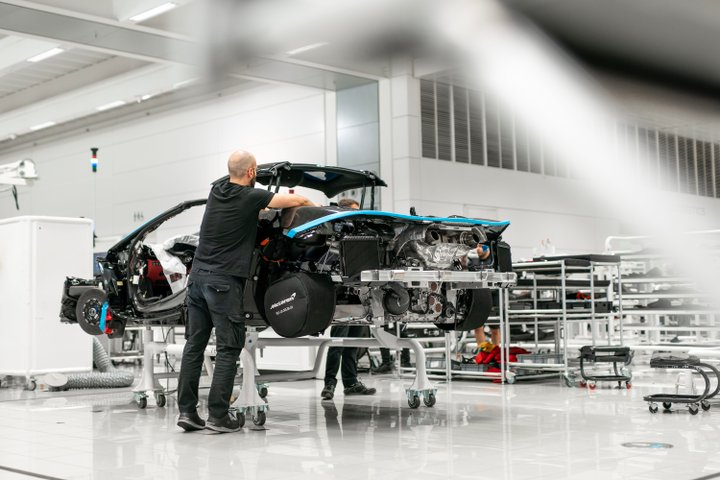
McLaren sold around 2,000 cars in 2025, down from just under 3,300 in 2024. It has also moved toward build-to-order production, reducing dealer inventory as it tries to protect pricing and residual values.
Most of its cars remain two-seat performance machines. An SUV gives McLaren access to customers who need more passenger space, luggage capacity and everyday usability without requiring the company to abandon the performance positioning around which its road-car business was built.
The £500 million programme also goes beyond the SUV itself. McLaren is expanding its existing operations in Woking and South Yorkshire while establishing a new vehicle assembly facility in the UK.
Future engines and transmissions will also be designed and built in-house, beginning with two new powertrains. That gives McLaren capabilities it can use across a wider range of vehicles rather than tying the investment to one new model.
McLaren Tried A Different Route Before
The company had already been considering ways to move beyond its traditional sports-car formula. In 2024, then-CEO Michael Leiters discussed a potential "shared performance" vehicle developed with another automaker. The proposal involved a plug-in hybrid with greater passenger and everyday usability than McLaren's traditional sports cars, with pricing suggested at around $400,000.
Leiters also acknowledged the practical limitation behind the idea: McLaren did not have a suitable larger vehicle platform of its own. The current programme takes a different route. Rather than finding an existing platform and adapting it, McLaren is expanding its own manufacturing capacity and engineering operations while developing future powertrains internally.
The SUV is therefore arriving alongside a broader attempt to give McLaren the hardware and production capability to build a wider range of cars.
Weight Will Be The Difficult Part
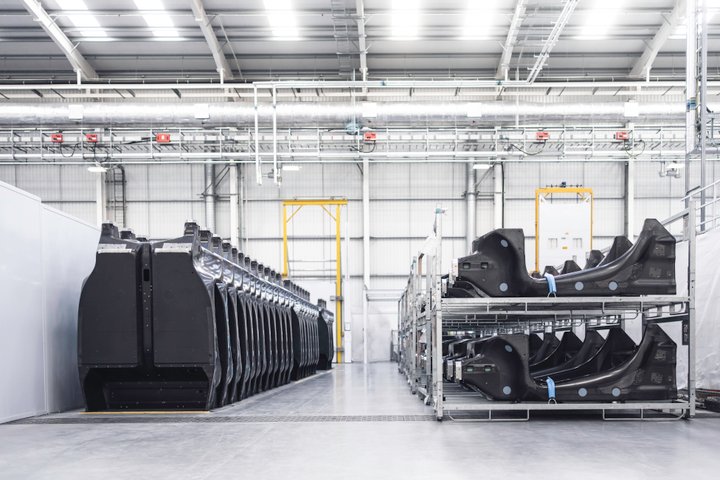
The manufacturing investment solves one problem. It does not make an SUV behave like a McLaren. Lightweight engineering and carbon-fibre construction have been central to the company's road cars for years. An SUV brings different requirements. It has to carry more people and luggage, while its larger dimensions and higher seating position change the engineering equation.
McLaren has not yet settled how much carbon fibre will feature in the production vehicle. COO Michael Straughan has said the material remains important to McLaren's engineering philosophy, but the company has not committed to using it for the SUV. Aluminium could prove more practical depending on the vehicle's size and requirements.
Power-to-weight remains a priority, and Straughan has said the SUV has to be recognisably McLaren. That leaves McLaren with a more difficult engineering brief than simply making an SUV fast. The company has to decide where the weight can be added without losing the characteristics that define its existing cars.
Ferrari Isn't Really The Benchmark
McLaren has had plenty of time to study the manufacturers that entered this market before it.
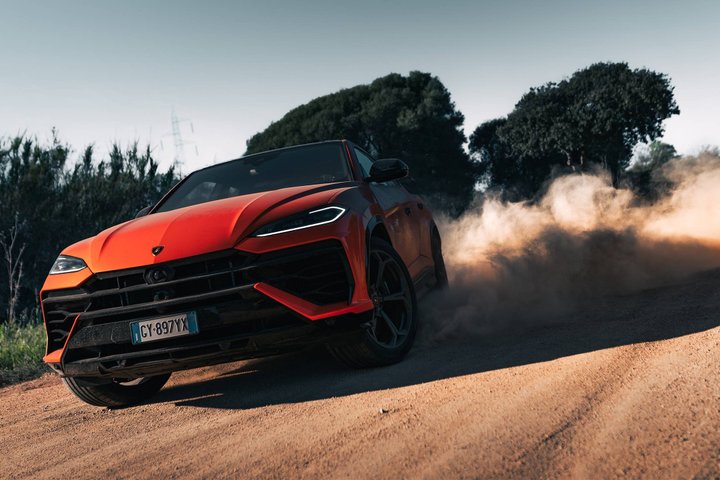
Lamborghini's Urus demonstrated how dramatically an SUV could expand a traditional supercar company's customer base. Aston Martin followed with the DBX, while Ferrari eventually brought the Purosangue into the market.
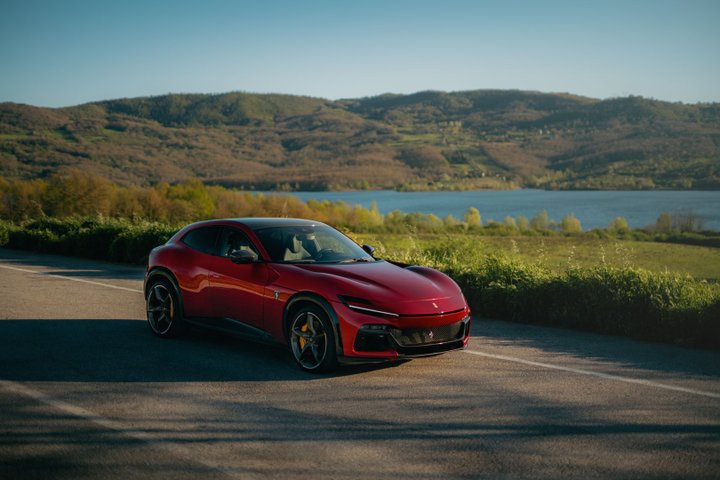
Straughan has described the Urus and DBX as closer comparisons for McLaren's SUV than the Purosangue, which he regards as a different interpretation of the performance four-seater. That distinction gives some indication of the product McLaren is trying to develop. It isn't simply turning a supercar into something with four doors and a taller ride height.
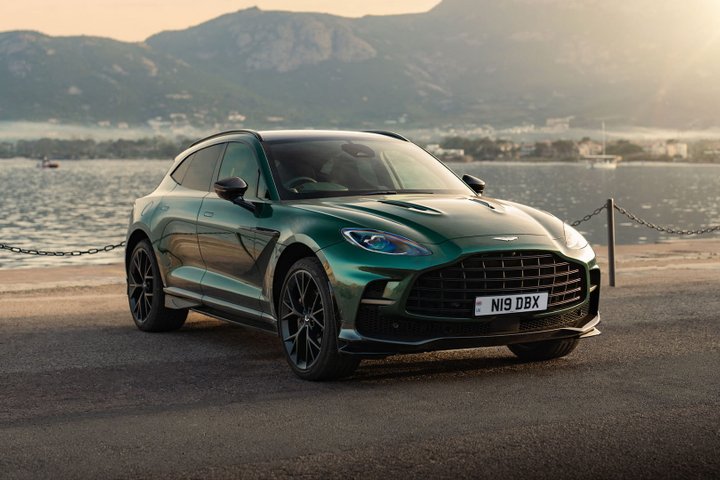
The company is entering a segment that has already become familiar to buyers of expensive performance vehicles. The challenge is making its version distinct enough to justify carrying the McLaren badge.
The SUV Is Still An Unfinished Argument
McLaren has not disclosed the production SUV's final design, detailed specifications or U.S. pricing. The company has confirmed the vehicle, the investment behind it and the manufacturing changes that will support its next generation of cars.
The remaining questions are therefore fairly concrete. How much weight will McLaren accept? How much of its carbon-fibre philosophy can survive in a larger vehicle? And can the company broaden its customer base without making the SUV feel like a product designed around volume rather than McLaren's existing engineering priorities? The answers will emerge as the vehicle moves closer to production.
Recommended Articles

McLaren's New McL 6GT Brings Bruce McLaren's Forgotten Road Car Dream Back to Life

The Ford Bronco Filson Is A Luxury Bronco That Still Wants To Go Off-Road

10 New Cars That Don’t Fit The Usual American Automotive Mold

After 9 Years of Waiting, the Tesla Roadster Is Finally Coming Back
Porsche Wants Its Old EV Batteries To Come Back As New Ones

The World of BRABUS: Everything the German Tuning Giant Does Beyond Cars

Project Endgame: An Ironman-inspired Guntherwerks 911

Join the Conversation
Comments
Loading comments…
No comments yet. Be the first to start the conversation.