

News
After 9 Years of Waiting, the Tesla Roadster Is Finally Coming Back
Tesla has teased the long-delayed second-generation Roadster, but we may see a reveal on October 1, 2026.


Tesla has undoubtedly become a major player in the automotive and tech space over the last decade, bringing some of the most advanced road cars we have ever seen—and accessible performance once reserved for high-end supercars.
The company’s first car was an electrified Lotus Elise called the Tesla Roadster. When Tesla unveiled the second-generation Roadster in 2017, it promised performance figures that sounded more like a hypercar than an electric sports car. It was supposed to arrive in 2020, but that never happened. Now, Tesla appears ready to bring it back.
After Nearly a Decade, Tesla Is Finally Bringing the Roadster Back
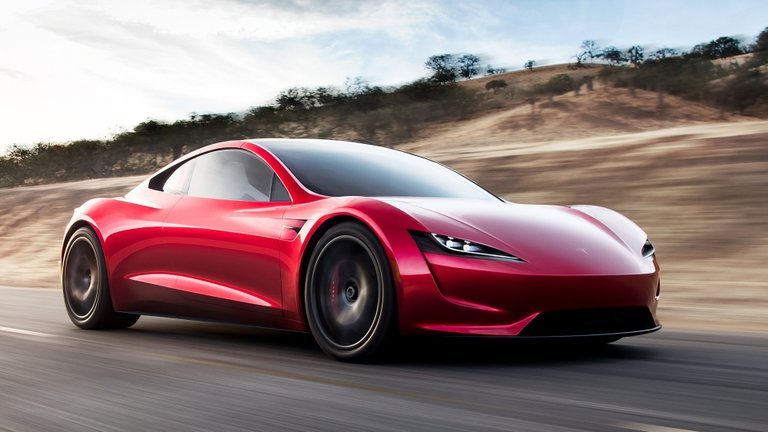
In November 2017, Tesla unveiled the second-generation Roadster as a follow-up to the lightweight sports car that started the company in the first place—only this time with performance that could embarrass some of the world’s fastest combustion-powered cars. Tesla promised a 0-to-60 mph time of just 1.9 seconds, a top speed of more than 250 mph, and an extraordinary 620-mile range. It would have four seats, three electric motors, and a removable glass roof. Tesla said the Roadster would start at $200,000, with a limited Founders Series priced at $250,000.
But there was a problem: the Roadster never arrived.
Tesla originally said deliveries would begin in 2020. That year came and went, followed by another promise and another promise. The Roadster became one of the most famous examples of a promised car that seemed permanently stuck as a concept.
Now, almost a decade after that original reveal, Tesla is finally giving us something new to look at. On September 12, the company posted a teaser showing the Roadster beneath a dramatic beam of light, accompanied by the caption “Go for launch” and the date 10.01. Elon Musk also teased that the car would be “out of this world.” On Tesla’s Roadster page, a Roadster section carries a countdown timer for October 1.
The Roadster Numbers Were Fast—But the Car World Has Moved On
The original Roadster’s numbers were outrageous in 2017. A 1.9-second 0-to-60 mph time was unheard of for any production car. Even the world’s elite supercars were still fighting to get close to the two-second mark. But something interesting happened while Tesla was still teasing its Roadster.
Everyone else got faster.
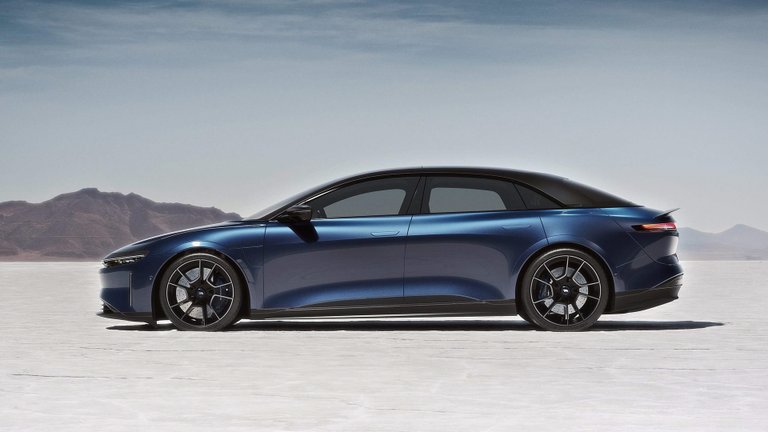
The Porsche Taycan Turbo GT eventually became the first production car tested by Car and Driver to break the two-second barrier, recording a 1.9-second 0-to-60 mph time. The Lucid Air Sapphire has also managed a 1.9-second run in MotorTrend testing. Cars like the Rimac Nevera have pushed electric-hypercar acceleration even further, while the Ferrari SF90 Stradale and Corvette ZR1X show how quickly hybrid and combustion-powered supercars have evolved.
That poses a problem for the Roadster. Even if it delivers on its original performance numbers—which is still bonkers no matter how you look at it—it has already been done. Tesla can no longer simply hit the same numbers it showed us in 2017 and expect everyone to be amazed. Tesla’s own Model S Plaid is already a staggeringly fast car.
Tesla cannot just come out with performance numbers anymore; the company may have to improve more than acceleration. A modern electric supercar needs good handling, predictable repeated braking, and better thermal management—not just one spectacular launch-control number. Tesla has an opportunity to make the new Roadster much more interesting than the original.
Tesla Has Built an Entire Lineup While Roadster Buyers Waited
The strangest thing about the Roadster’s delay is just how much Tesla has managed to do during the same period. When the Roadster was revealed, the Model 3 was just heading into production. The Model Y did not exist, the Tesla Semi was still a prototype, and the Cybertruck would not arrive for another six years.
Since then, Tesla has launched the Model Y, expanded production across multiple continents, delivered its first Semi trucks, introduced the Cybertruck, and transformed itself into a vastly larger automaker. Tesla says the Model Y became the world’s best-selling car in 2023, while Cybertruck deliveries finally began in November that year.
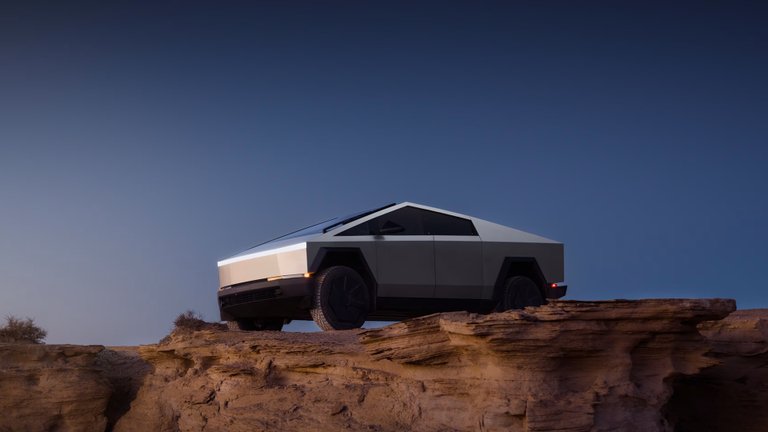
The Cybertruck is probably the best example of just how long we have been waiting for the Roadster. Tesla unveiled the bizarre stainless-steel pickup in 2019. Four years later, the first customers finally received their trucks. Everyone said Tesla would never make it, but even the Cybertruck managed to beat the Roadster to production.
Tesla has already taken real money from people who wanted the sports car. When reservations opened in 2017, buyers put down $50,000 for the standard Roadster, while the 1,000-car Founders Series required $250,000 upfront. Those deposits helped generate hundreds of millions of dollars in potential customer funding before a single Roadster was delivered.
For those early reservation holders, this has been an unusually long wait. They have watched Tesla build factories, launch new models, develop new batteries, release the Cybertruck, and make huge progress with autonomous driving while the car they paid to reserve was in limbo. But we may finally have some answers.
We Will Get Answers on October 1
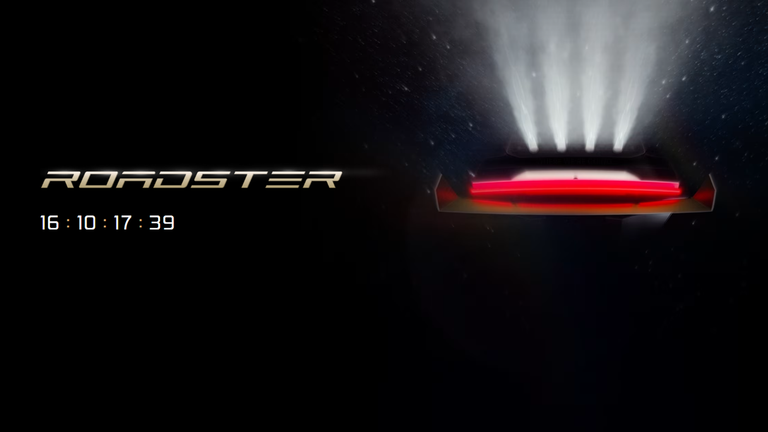
Tesla has officially scheduled the Roadster’s unveiling for October 1, 2026. This time, there may be more to show than the same red prototype we have been seeing for years. The latest teaser appears to show a significantly different Roadster, while reports indicate that Tesla has redesigned the car and that the project may have evolved from a Model S Plaid-based approach into an entirely new carbon-fiber hypercar.
After nine years of waiting, we may actually get to see what Tesla produced. Tesla already knows how to make brutally quick cars; the Model S Plaid proved that. The new Roadster has to do something more. It has to combine that acceleration with the speed, engineering, and presence expected of a true supercar—or potentially something even better. For years, we have been teased about the Roadster.
On October 1, Tesla finally has to show us the car.
Recommended Articles
8 Used Performance Bargains That Can Outrun a 2027 Corvette Stingray
9 Factory 1,000-HP Cars That Aren’t Hypercars
10 New Cars That Don’t Fit The Usual American Automotive Mold
Pure Driving Perfection: The Complete Lineup of Gordon Murray Automotive
8 New V12-Powered Cars You Can Buy in 2026

McLaren's New McL 6GT Brings Bruce McLaren's Forgotten Road Car Dream Back to Life
19 Brand-New Manual Sports Cars Under $100,000 in 2026

Join the Conversation
Comments
Loading comments…
No comments yet. Be the first to start the conversation.