
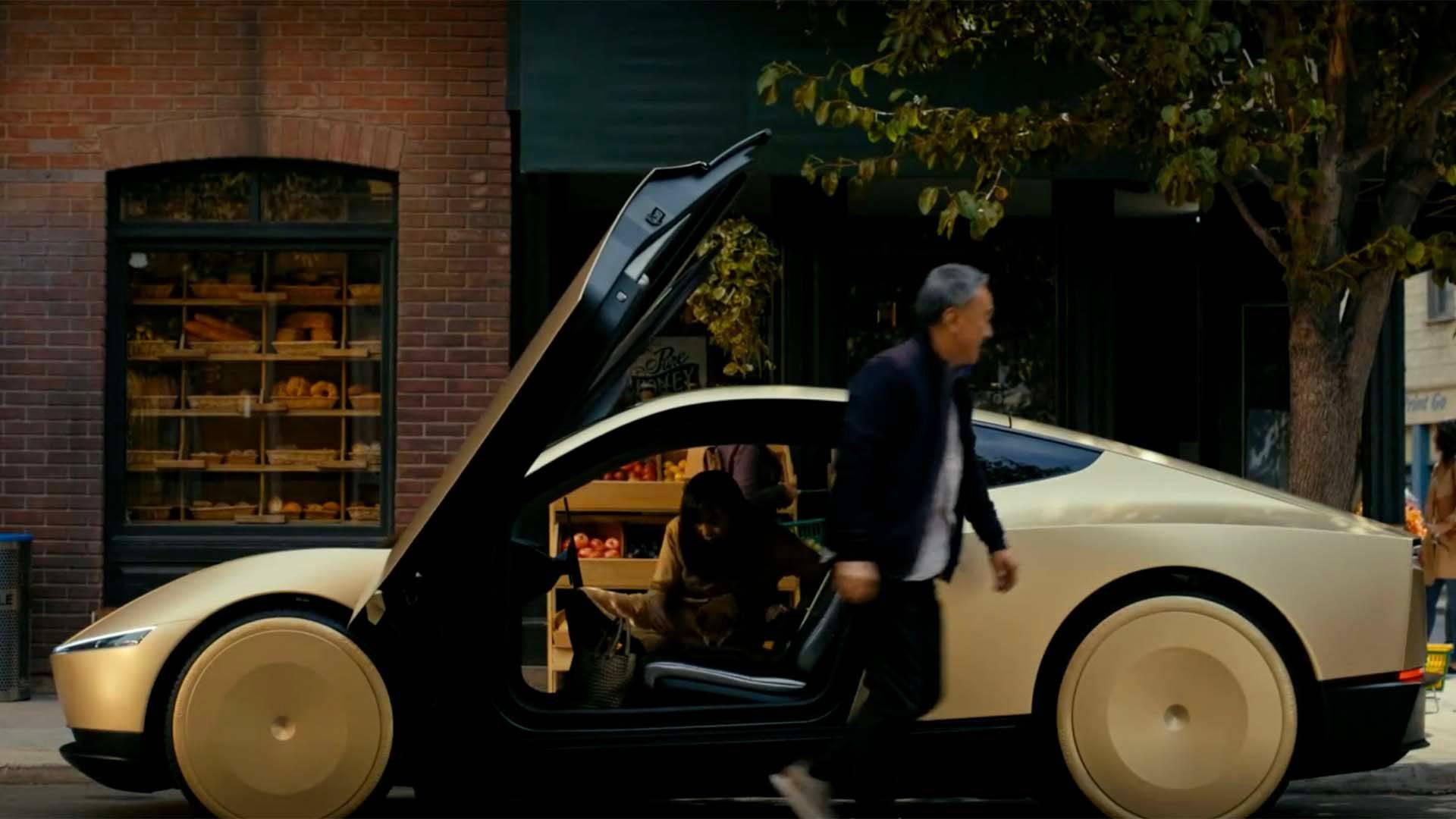
Tesla’s Cybercab has been spotted testing on public roads in Austin, Texas, giving the clearest sign yet that the automaker is moving its purpose-built robotaxi from controlled validation toward real-world deployment.
The sightings follow Tesla’s confirmation in late June that engineering tests had begun for the first production-spec Cybercab. The latest footage is notable because the two-door autonomous vehicle is no longer limited to a private loop or parking-lot environment. It is now being observed in live traffic, sharing public streets with regular vehicles.
The Cybercab shown in testing appears to match the compact two-seat vehicle Tesla revealed in 2024. It is designed without a steering wheel or pedals, reflecting Tesla’s plan for a vehicle that relies entirely on its autonomous driving system rather than human fallback controls.

Austin Gives Tesla a Real-World Robotaxi Test Bed
Austin is expected to be Tesla’s first Cybercab market and has become a key location for the company’s autonomous-vehicle efforts. The public-road footage reportedly shows the Cybercab operating on surface streets, including urban driving situations such as intersections, lane changes and moderate traffic.
The vehicle appears to be operating without a visible safety driver in the cabin. That aligns with Tesla’s ambition for fully driverless operation, but it does not necessarily prove that the Cybercab is running without supervision. Remote monitoring is common during early public-road testing programs, and Tesla has not yet published detailed safety data for the Cybercab.
The System Still Relies on Cameras, Not LiDAR
The Cybercab continues Tesla’s camera-only approach to autonomy. Unlike Waymo’s robotaxis, which combine cameras with LiDAR and radar, Tesla’s system depends on cameras and onboard AI to interpret traffic, lanes, pedestrians and changing road conditions.

That strategy could give Tesla a cost advantage if it works reliably, because a camera-only vehicle is cheaper to build and maintain than a sensor-heavy rival. The tradeoff is that the software must accurately handle difficult visual conditions, including bad weather, construction zones, emergency vehicles and unpredictable pedestrian behavior.
What Remains Unknown Before a 2026 Launch
Tesla has indicated that paid Cybercab rides could begin before the end of 2026, with Austin positioned as the launch market. Production-spec hardware on public roads is an important step toward that goal, but it is not the same as commercial readiness.
The company still needs to show how the Cybercab performs over significant mileage and under a wider range of conditions. Regulatory approval, safety reporting, fleet operations and charging logistics will also matter. The Cybercab is expected to support inductive wireless charging, a useful feature for a robotaxi fleet because it could reduce the need for manual plug-in charging.

For now, the Austin sightings show Tesla is treating its 2026 robotaxi target seriously. The more important evidence will come from safety miles, official filings, broader testing and whether the Cybercab can move from limited public-road validation to paid passenger service.