
News
Audi Nuvolari Design: 405 Days to Build a 217-MPH Supercar
Audi’s new limited-run halo car was developed at unusual speed, but its defining story may be the rear wing its design chief refused to approve.
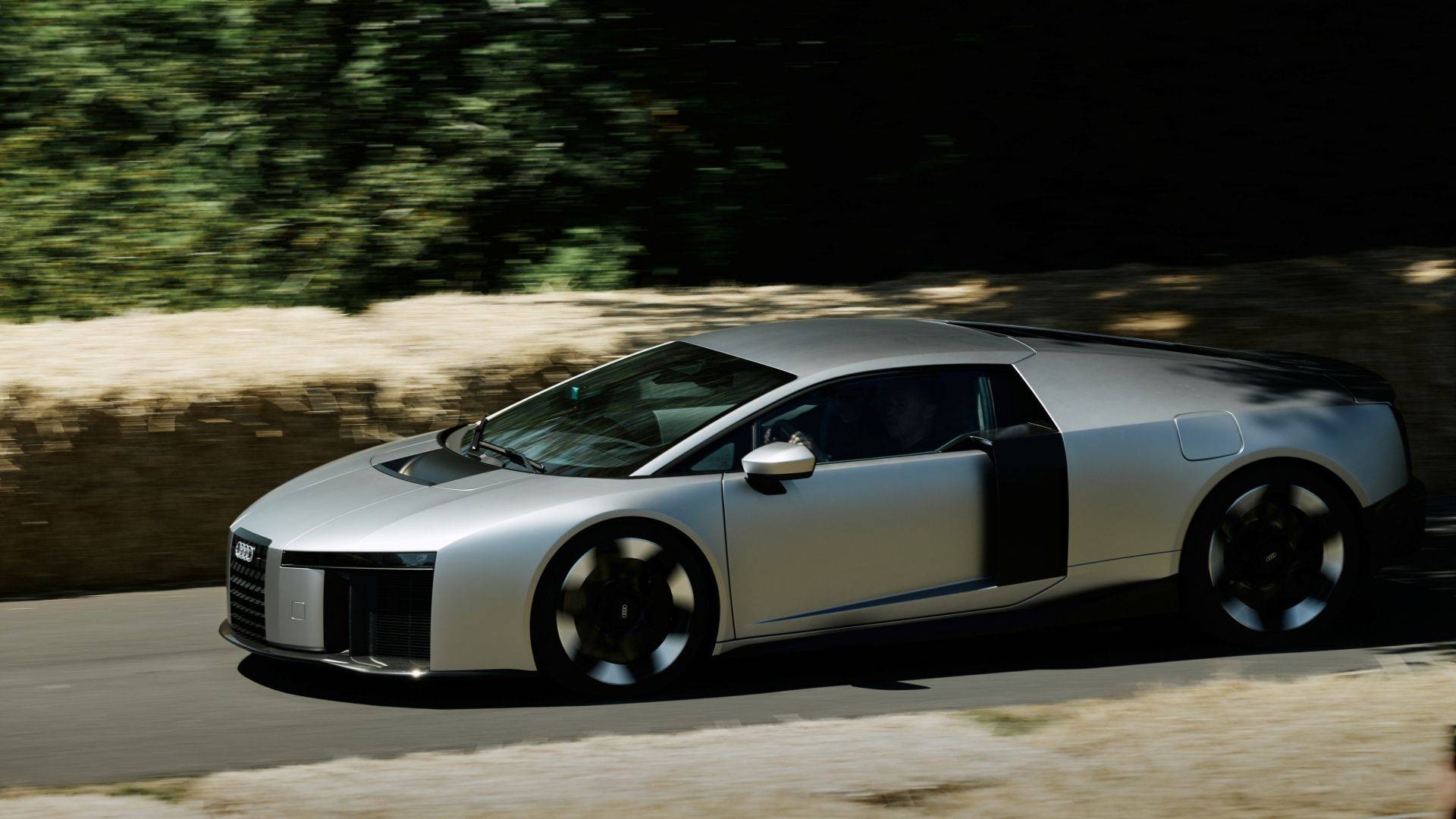
Audi developed the Nuvolari from a first sketch to a drivable prototype in exactly 405 days, according to a TopSpeed report on the supercar’s design story. The limited-production model is expected to reach customers in the first half of 2027, with just 499 units planned and a claimed top speed of more than 217 mph.
The Nuvolari is significant beyond its production count. It is described as Audi’s first production car to wear the brand’s new design language and as a spiritual successor to the R8. Underneath, the car is linked to the Lamborghini Temerario platform, continuing the Volkswagen Group supercar connection that previously tied the R8 to Lamborghini hardware.
The most revealing detail is what Audi chose not to put on the car. Early in development, a large rear wing was considered, but Chief Creative Officer Massimo Frascella rejected the idea. “I don’t know if you can record this,” he said on camera, according to the report, “but I said: ‘Over my dead body.’”
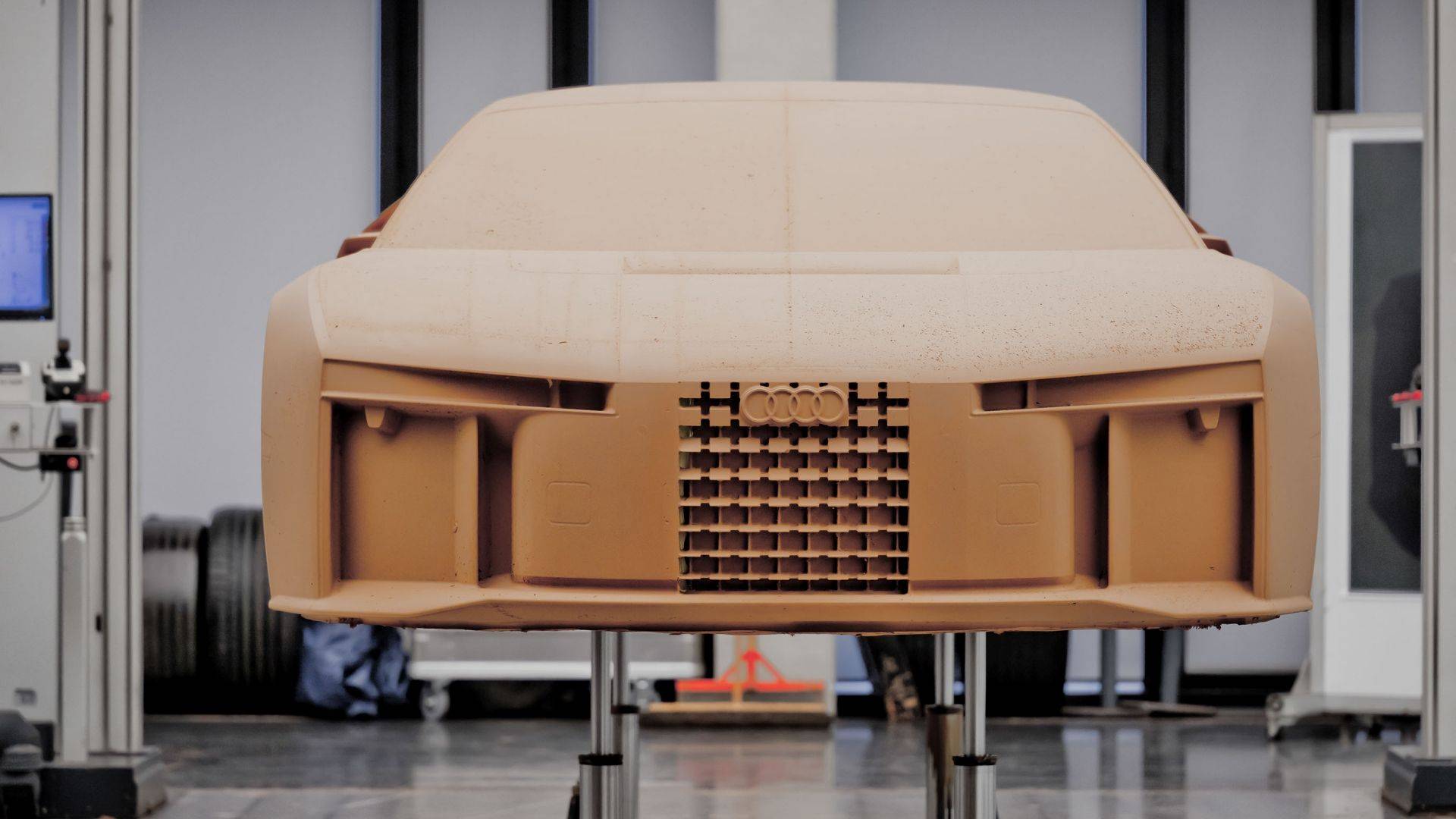
Frascella’s objection shaped the car’s aerodynamic package. Rather than using a fixed wing, Audi developed an adaptive rear spoiler that sits flush with the body when not needed. It can reduce drag on straights, then deploy for more downforce during braking and cornering. Audi also fitted a DRS-style steering-wheel button that lets the driver flatten the spoiler for high-speed running.
That system is central to the 217-mph claim. The setup allows Audi to pursue the clean “gentleman racer” look described by Head of Concept Development Jürgen Meurle while still giving the Nuvolari functional high-speed stability. The result is a supercar that hides much of its performance hardware instead of displaying it through a large fixed aero element.
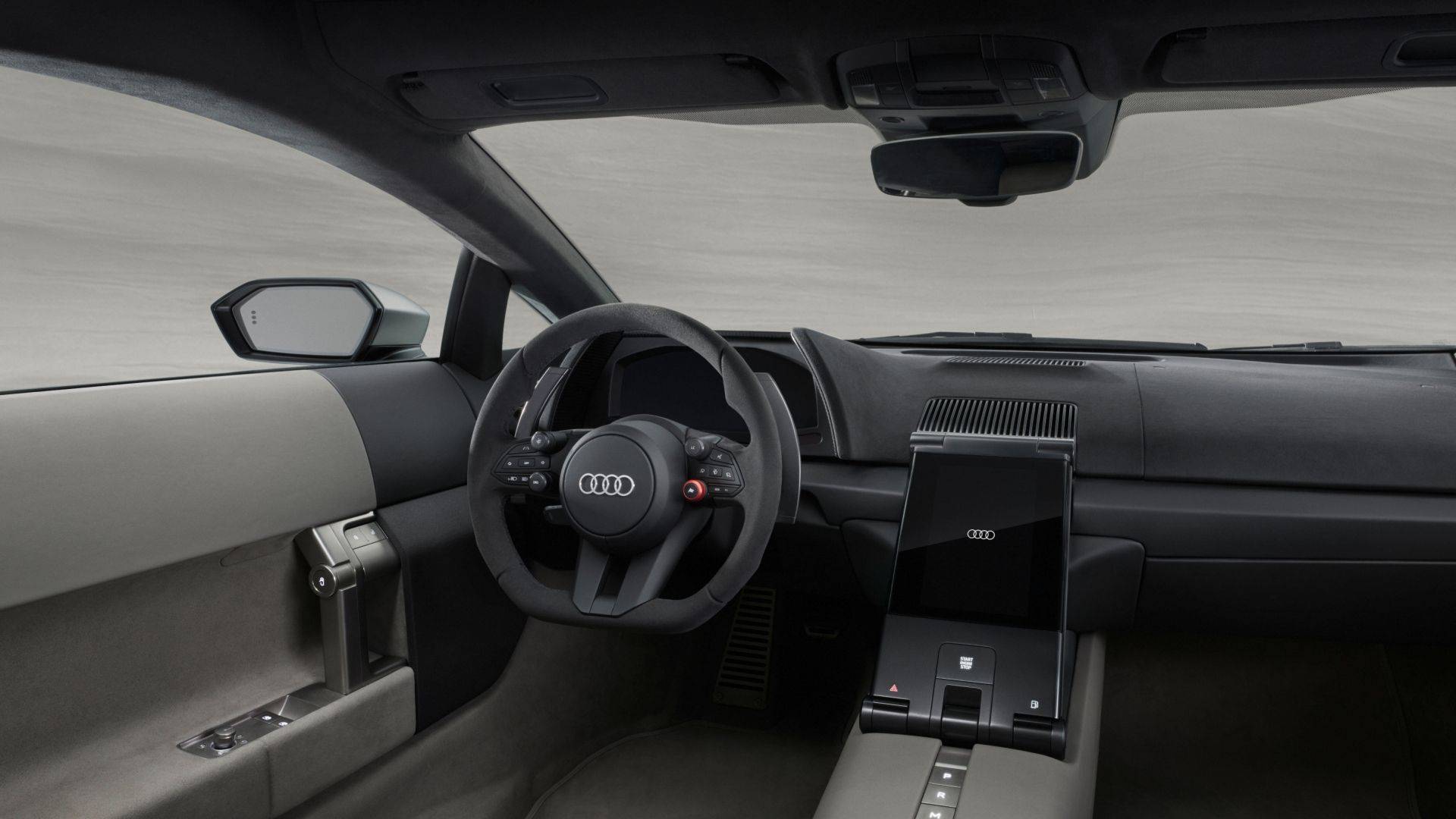
The short development timeline did not remove normal engineering problems. Early versions of the carbon-fiber body had a more closed rear section, but the twin-turbocharged 4.0-liter V8 required more heat evacuation. Audi’s engineers added rear vent slats to improve airflow and keep temperatures under control during hard use.
Testing took place across Europe, including cold-weather work in Lapland, suspension tuning in Spain and high-speed running at the Nardo Technical Center in Italy. Formula 1 driver Gabriel Bortoletto tested prototypes, while Nico Hülkenberg was involved at Audi’s facility in Neustadt an der Donau.
The car was unveiled at the Hotel du Cap-Eden Roc in Antibes ahead of the Monaco Grand Prix, underscoring its role as a halo project rather than a conventional volume model. For Audi, the message is as much about design discipline as speed.
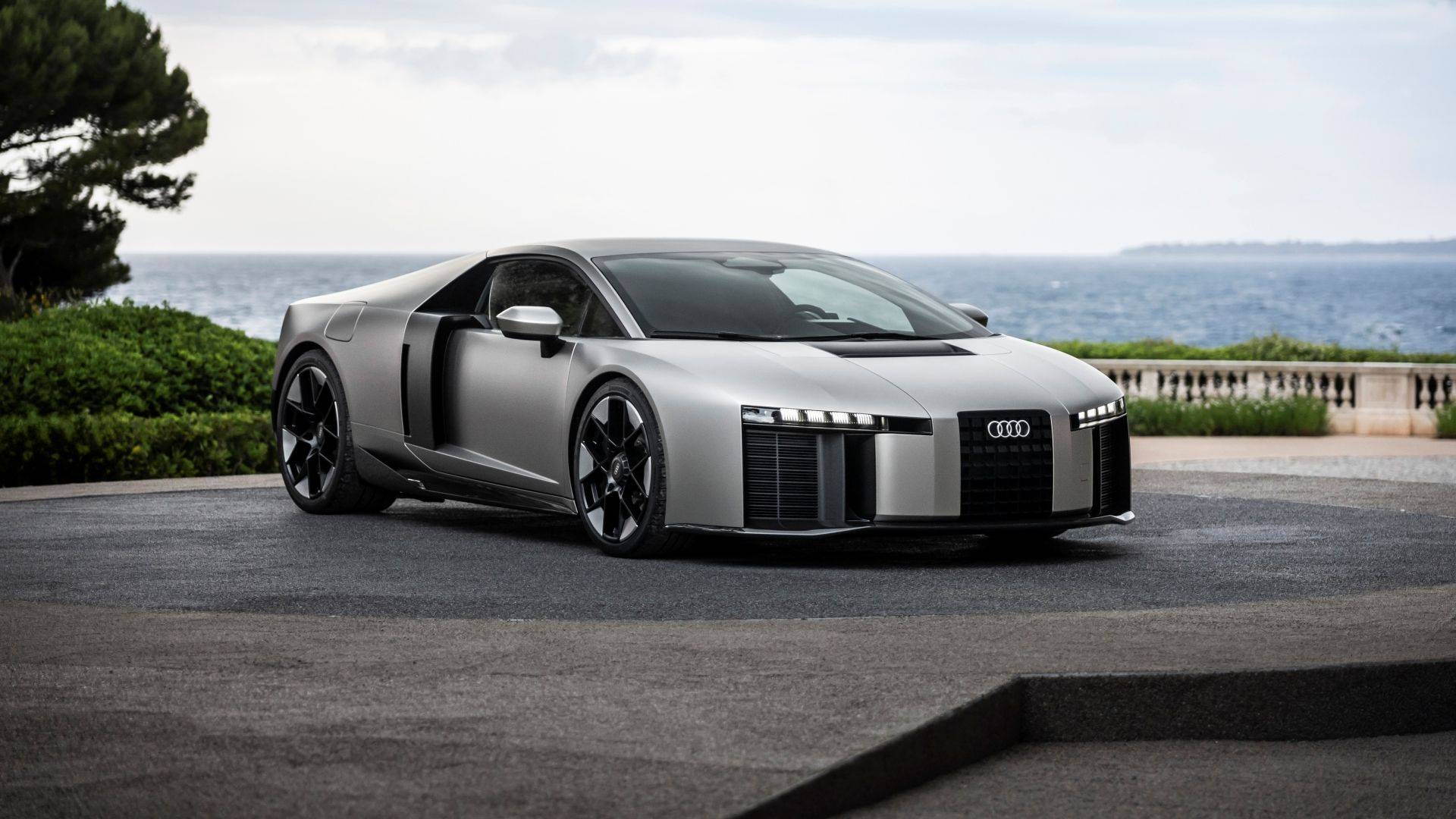
For Audi, the Nuvolari is more than a 499-unit flagship. It is a low-volume test of a new visual identity before that language spreads to broader models. A road-going Concept C electric sports car is also due in 2027, while the electric A4 is expected to bring the design direction to higher-volume production in 2028.